
New Mexico Arrest Records and Charges
An arrest record is created by the law-enforcement agency that takes a person into custody. It can identify the arrested person, agency, date, initial alleged offense, and booking or release facts. It is not proof of guilt. After referral, the prosecutor may decline, amend, reduce, add, or formally file allegations. Once a complaint, information, or indictment reaches the court clerk, it becomes part of the New Mexico court charge record.
Booking and jail custody belong to agency or detention records; New Mexico inmate records address that separate system. Judicial charge status belongs in the case docket. The full case file continues through pleas, motions, disposition, and sentence. One arrest may produce several charges, no filed charge, or a filed charge different from the intake label. Always compare the initial arrest record with the court charges after arrest and the final disposition.
Search New Mexico Arrest Records
Use New Mexico Case Lookup for public electronic court data. It supports name, case-number, and DWI historic-conviction searches without registration. It can show filed charges, docket activity, and disposition, but not the original law-enforcement report or booking photo. For arrest facts, contact the arresting agency or relevant county detention channel. For the court case, use the filing court and the county directory.
- Identify the arresting agency, county, and likely court.
- Search Case Lookup by defendant name, birth date, or case number.
- Confirm the court, filing date, and party before opening the charge list.
- Read each charge, docket change, disposition, and sentence separately.
The New Mexico DPS Law Enforcement Records Bureau is the statewide criminal-record agency. It is distinct from one court case and from New Mexico Courts IPRA, which does not conduct background checks or maintain law-enforcement records. The court clerk remains the source for the charging document and docket. The arresting agency remains the source for its report.
New Mexico Charging Documents
The court charge record begins with a formal accusation. A complaint states initial allegations. An information states charges filed by a prosecutor. An indictment states charges returned through a grand jury. The exact route depends on the offense and procedure. Each document must be read with later amendments and the final disposition.
| Complaint | Information | Indictment | |
|---|---|---|---|
| Filed By | Officer / Prosecutor | Prosecutor | Grand Jury |
| Function | States initial allegations | States prosecutor-selected charges | States grand-jury charges |
| Effect | Creates or advances the court charge record when filed | ||
New Mexico Court Charge Status
Filed accusations can change. A prosecutor may amend a count, add one, reduce severity, or dismiss it. Plea negotiations may resolve some counts while others end. The first charge label is only a starting point. Read each status beside later docket entries and the charge-level disposition.
- Pending
- No final result has been recorded.
- Amended or reduced
- The accusation or severity changed.
- Dismissed
- The charge ended without conviction; refiling can depend on terms.
- Acquitted
- A not-guilty finding ended the charge.
Charges vs. Convictions
Neither a New Mexico arrest nor a filed charge establishes guilt. A conviction requires a guilty plea or finding. Charges may be dismissed, amended, or resolved by acquittal, and those events remain in the case history unless access is restricted. A sound search reports the accusation and outcome together.
| Charge | Conviction | |
|---|---|---|
| Stage | Accusation | Verdict or plea |
| Burden of Proof | Probable cause | Beyond reasonable doubt |
| Public Record | Yes | Yes |
Sealed vs. Expunged Records
Sealing restricts access under a court order or confidentiality rule. New Mexico expungement is a statutory petition process for qualifying arrest and public criminal records. A grant limits public release but does not destroy the record. Eligibility varies by outcome and can require a completed sentence, paid obligations, waiting periods, and satisfaction of statutory limits.
| Sealed | Expunged | |
|---|---|---|
| Visibility | Restricted as ordered | Public release limited after a granted petition |
| Record | Still exists | Still exists for authorized uses |
| Eligibility | Depends on governing rule | Controlled by the Criminal Records Expungement Act |
New Mexico Charge Codes and Levels
A charge should identify a statute or ordinance and severity. Felonies proceed in District Court after any preliminary stage. Misdemeanors may remain in Magistrate, Metropolitan, or Municipal Court based on venue and offense. One arrest can produce several counts at different levels. Record the exact code, description, court, and status rather than relying on a booking label.
The research did not establish a complete statewide glossary for every short code. Ask the court clerk when an abbreviation is unclear. Staff can explain procedure and the record, but cannot give legal advice. The charging document is the best source for the accusation's formal text.
New Mexico Statewide Criminal History
DPS is the state-level law-enforcement record source, while Case Lookup is the judicial case index. The research did not confirm one public statewide fee or instant workflow that can safely be stated, so consult DPS for current rules. For a charging document, order, or docket, use the filing court through the county directory.
The DPS expungement resource explains that qualifying people may petition to expunge certain arrest and public criminal records.
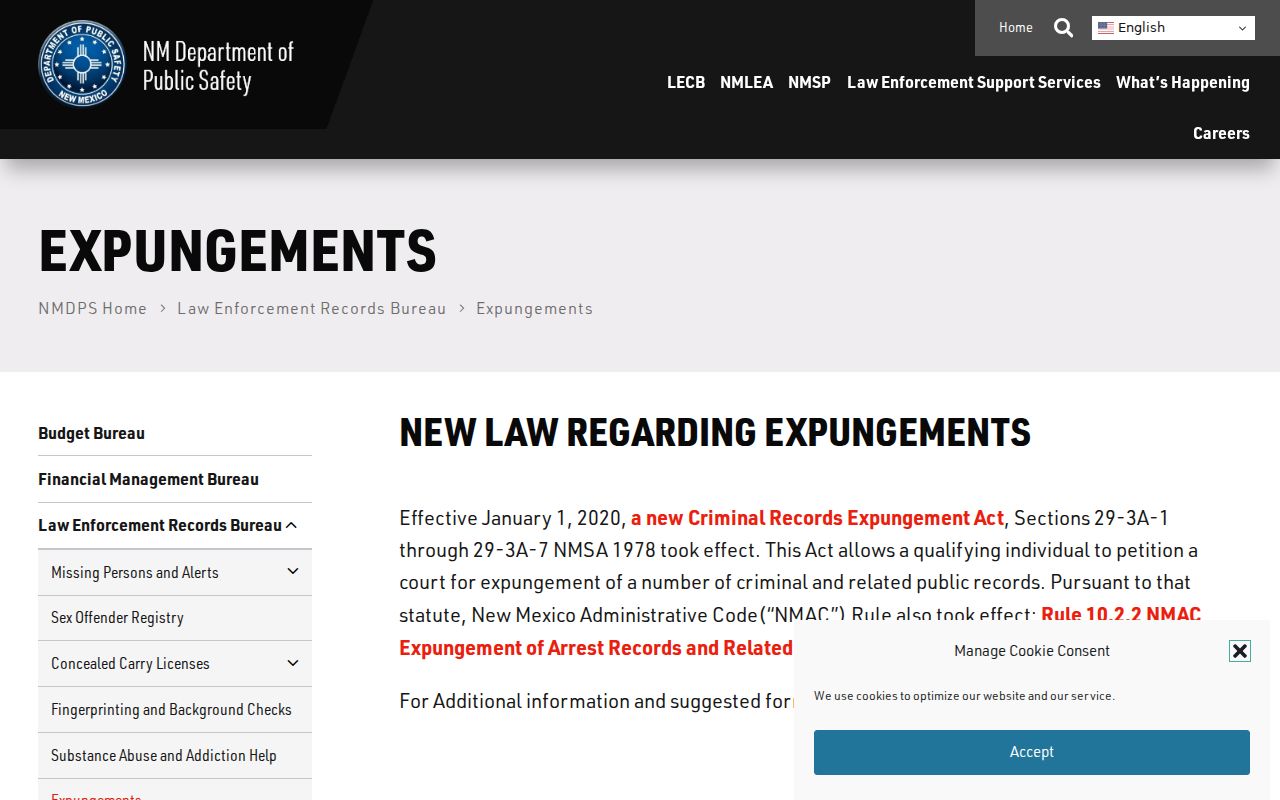
The official material connects court relief to agency records, but it does not promise that every record qualifies or that all traces disappear.
Background Check Considerations
Public-record research differs from a consumer report used for employment, housing, credit, or insurance. The Fair Credit Reporting Act controls permissible purpose and adverse-action procedure for regulated screening. A name match is not enough because identities can be confused and charges may have been dismissed. Verify the source case and disposition, and use an authorized consumer reporting process when required.
Important: Records here may not be used for employment, credit, housing, insurance, or another FCRA-regulated decision.
Restricted New Mexico Charge Records
Juvenile criminal cases have not appeared in public Case Lookup since July 1, 2007. Social Security numbers and addresses are withheld. Sealed and expunged records do not appear through ordinary access, and active investigation files follow rules different from filed court documents. A no-result search cannot prove no arrest or charge exists.
Prosecutor-run diversion can also affect the case path. As a representative example, the Thirteenth Judicial District Attorney diversion page describes possible eligibility for certain first-time, nonviolent felony defendants, subject to counsel, approvals, victim and agency agreement, and program terms.
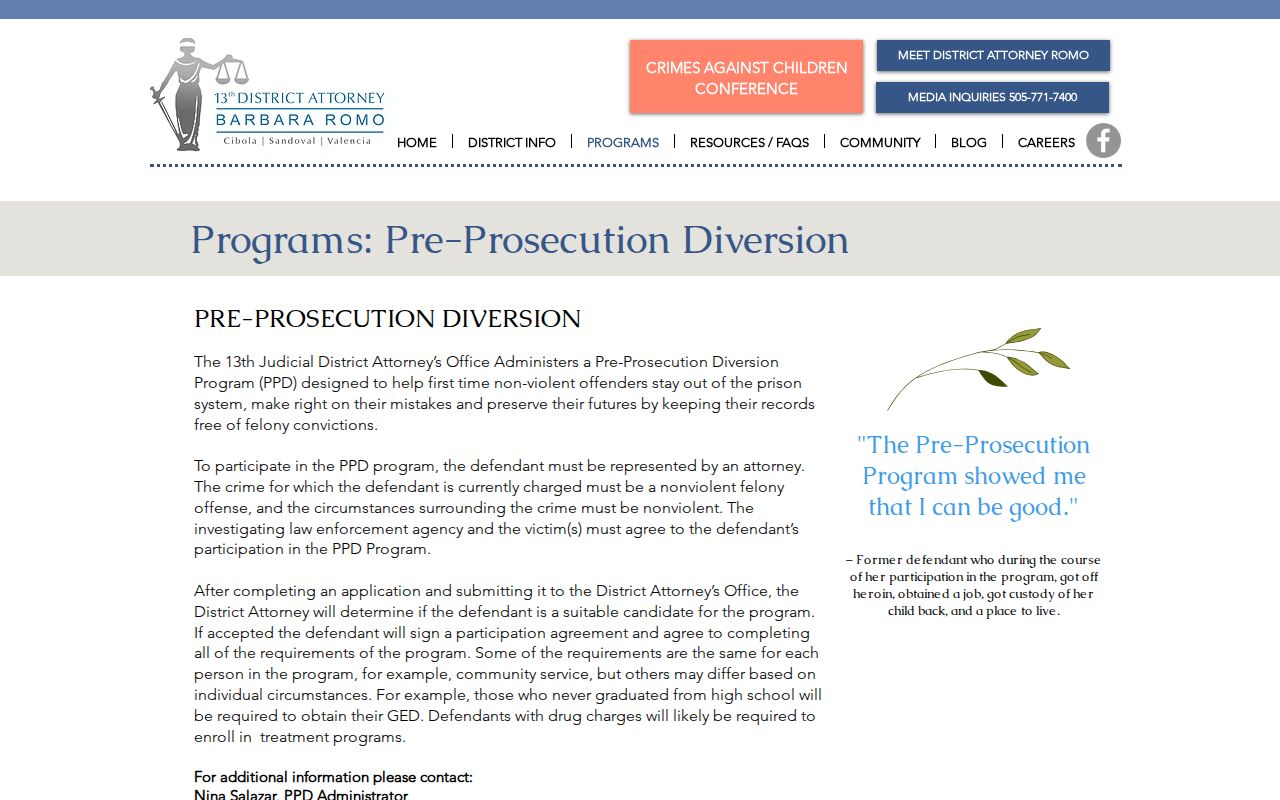
The Cibola, Sandoval, and Valencia district example illustrates one local channel and is not a uniform statewide guarantee.
Access requests must go to the right custodian. New Mexico Courts IPRA can route court documents and older judicial records, but it does not keep police reports, driving histories, background checks, or marriage licenses. A police or sheriff report goes to the law-enforcement agency. A complaint, indictment, order, plea, or disposition goes to the court clerk. A statewide law-enforcement history belongs with DPS. Splitting the request this way avoids treating one partial record as the entire arrest-to-case history.
Case Lookup also has firm limits. It is intended for individual electronic court-record searches, and its disclaimer bars attempts to download multiple records in one transaction. Public results omit filed documents and personal identifiers such as Social Security numbers and addresses. Municipal data is limited to certain criminal domestic-violence and DWI historic convictions. Records before 1997 require an online court request. These limits make county and agency follow-up necessary even when a name returns no result.
New Mexico arrest records can also involve counsel before a case ends. A jailed person with court-appointed public defense receives an assignment through the court. A non-jailed person applies through the nearest Law Offices of the Public Defender location. In counties without a local office, appointed contract counsel may be coordinated after the court makes the appointment. Public docket entries may identify counsel, but attorney communications and defense work product are not open arrest-record files.
Victims may encounter a second system. District attorney advocates can explain case events, and NM SAVIN or VINE can deliver automated court or custody notifications by phone, email, or text. Research from the Thirteenth Judicial District warns that victims of violent crime seeking written notice of proceedings, parole hearings, or corrections releases must keep contact information current with the prosecutor. Notification services do not decide charge status; the court docket and filed orders do.
Finally, location controls the court. Felony prosecutions belong in District Court after preliminary stages. Misdemeanors, DWI, and many traffic matters may be handled by Magistrate Court, the Bernalillo County Metropolitan Court, or a Municipal Court. New Mexico has 33 counties and many local court locations. Match the arrest site, charging court, and case number before ordering a record, because an elected County Clerk does not keep criminal court pleadings.
A request for a certified charge record should name the document, not just the person. Useful targets include the filed complaint, information, indictment, amended charge, plea, dismissal order, judgment, or sentence. Provide the case number and court when known. If only an arrest date is available, begin with the agency record, then use the court search to locate any resulting prosecution. That sequence keeps the initial allegation separate from the formal and final New Mexico court record.
Ask whether the copy needs a clerk certification or only serves as an informational copy. That choice affects cost, processing, and whether the document is suitable for an official filing.